
This piece is about our experience and the research, not medical advice. Talk to your own doctor before you put anything on a drip into your arm.
There is a specific kind of quiet that happens when you are sitting in a reclining chair, a needle taped to your arm, watching a clear bag drip into you for the better part of an afternoon. You start to notice things. The faux-eucalyptus plant. The playlist that is trying very hard to be a spa and mostly sounds like a hotel lobby. The slow, creeping warmth rising up your neck. That last one is the NAD, and it is the reason we are here. So we did the thing the internet keeps daring us to do. We tried NAD IV therapy, sat with it for three hours, and came back with notes.
So What Is NAD+ IV Therapy, Exactly?
Here is the deal, minus the clinic brochure language. NAD+ (nicotinamide adenine dinucleotide, if we are being formal) is a coenzyme that lives in every cell you have. It helps your body turn food into energy, repair DNA, and generally keep the lights on. Levels naturally dip as you age, which is the hook the entire wellness industry has been waiting for.
NAD IV therapy is the splashiest way to top those levels back up. Instead of a pill, you get NAD+ dripped straight into your bloodstream over a couple of hours, usually at a wellness clinic, sometimes in your own living room if you book a mobile nurse. It is sold as the premium option, the one that skips digestion and goes right to the source. It is also the most expensive way to do this by a wide margin, which is worth saying out loud before anyone gets too excited.
What the Chair Actually Feels Like
Nobody warns you that the main side effect of NAD IV therapy is time. Plan on two to four hours for a first session, because the drip has to go in slowly. This is not a lunch-break situation. Bring a book, download something, accept that you have surrendered your afternoon.
Then there is the flush. A warm, slightly prickly heat spreads through your face and chest, the same mechanism as a niacin flush, your blood vessels widening as the NAD goes in. Push the drip faster and some people get chest tightness, the kind that feels like someone polite is sitting on your sternum, plus a wave of mild nausea. None of it is dangerous in a supervised setting, and here is the part that actually matters: nearly all of it is rate-dependent. Feel the pressure, tell the nurse, they slow the drip, the feeling fades. We slowed ours twice and were perfectly fine. By the end we were mostly just bored, which, honestly, is the best-case review of a medical procedure.
Did we float out feeling like a brand-new person? Not exactly. We felt fine. A little tired from sitting still for three hours, a little lighter in the wallet. The dramatic “clarity” some people describe did not arrive on schedule for us, and that tracks with what the research says next.
What the Science Actually Says About NAD+ Benefits
This is where we put the receipts on the table, because the gap between the marketing and the evidence is the whole story here.
The biology is real and genuinely exciting. A major 2025 review in Nature Aging, co-authored by more than two dozen scientists including Harvard’s David Sinclair, flagged NAD+ as a key molecule in how we age and in fighting neurodegenerative disease. That is not nothing. NAD+ matters.
The catch is the delivery. When you narrow the claimed NAD+ benefits down to the IV format specifically, the human evidence thins out fast. A 2023 systematic review found insufficient evidence that intravenous NAD+ improves fatigue or energy in healthy adults. It is not FDA-approved for any of the glossy promises (anti-aging, brain fog, that all-day battery life), and reported side effects during those long infusions include nausea, headaches, and muscle aches. Translation: the molecule is promising, the IV drip is mostly running on enthusiasm and small studies, not settled proof.
The IV Drip Trap Nobody Mentions
Here is the part the glossy clinic websites skate right past. NAD+ is not a one-and-done situation. Your body uses it, burns through it, and needs it topped up again, which means the benefits people are chasing live in consistency, not in a single dramatic afternoon. One drip gives you a big, temporary spike, and then a slow slide right back to where you started.
And one or two drips is exactly what most people actually do. At $250 to $1,000 a session, plus two to four hours in a chair every single time, the math gets brutal fast. Almost nobody can realistically go back week after week, month after month, for long enough to see a real shift. So they spend a small fortune on a couple of infusions, feel basically nothing that lasts, and quietly decide the whole NAD thing was hype. The therapy did not fail them. The frequency did. The true benefit was never really on the table, because the schedule it would take to deliver it was never realistic to begin with.
The Gold Standard Is Boring (and That’s Why It Works): Daily NAD+
So here is where we land, and we are going to be a little annoying about it, because it matters. The thing that actually moves your NAD+ levels is not intensity. It is showing up every single day. And the easiest, most affordable way to show up every single day is an oral NAD+ precursor, taken like a vitamin. No needle, no chair, no surrendered afternoon.
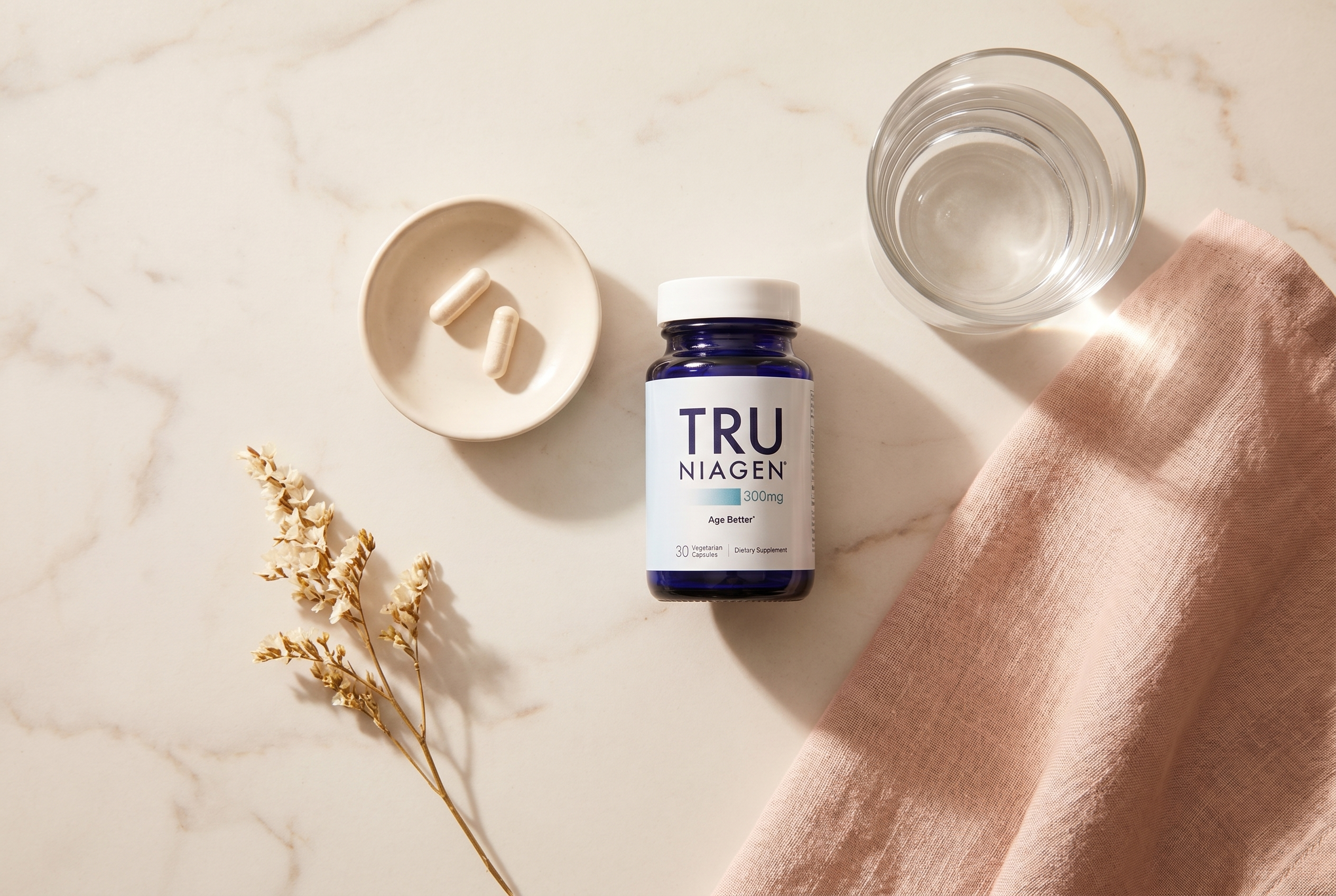
The one we would actually buy is Tru Niagen. It uses Niagen, a patented form of NR (nicotinamide riboside) with real clinical research behind its ability to raise blood NAD+ levels. The standard serving is 300 mg, but the dose the research gets genuinely excited about is higher. In trials, a daily 1,000 mg of NR was well tolerated and raised NAD+ in a real, measurable way, with one pharmacokinetic study seeing whole-blood NAD+ roughly double on a 1,000 mg routine. That is the quiet headline here: a consistent daily 1,000 mg is the gold-standard move, the one that can actually make a difference, precisely because it is something you can keep doing.
Think about what that unlocks. A daily 1,000 mg habit costs a fraction of a single IV session, and you do it standing at your kitchen counter with your coffee. No booking, no two-hour drip, no flush creeping up your neck. Just the one variable the science keeps pointing back to, consistency, made genuinely easy. Two honest caveats, because we do not do hype: response to NR varies from person to person, so this is a slow, compounding build and not an overnight switch, and 1,000 mg is more than the starter serving, so loop in your doctor before you scale up, especially if you take medication. (And a quick word on NMN, the trendier precursor you will also see: independent testing has caught a lot of NMN products not containing what their labels claim, so if you go that route, buy only from a brand that publishes third-party testing.)
The Verdict: Is NAD IV Therapy Worth It?
Let’s be clear. NAD IV therapy is not a scam, and it is not a miracle. It sits in that expensive middle where the science is early, the experience is fine, and the price is the realest part of the equation.
And the price is steep. Entry sessions (think 250 to 500 mg) tend to run about $250 to $400. A full 1,000 mg session in a major city like New York, LA, or Chicago lands closer to $600 to $1,000 and up, often sold in packages so you commit to several. If you search “IV therapy near me” out of curiosity, that is the range you are looking at, per visit, repeated.
So our actual verdict: if you have the disposable income, you are bored of being told no, and you want the full reclining-chair experience under real medical supervision, it is a fine, safe-enough thing to try once. Just go in with your expectations calibrated to “interesting afternoon,” not “new personality.” If what you actually want is to support your NAD+ levels without donating a car payment, start with a daily oral precursor and your own doctor, and save the drip for the day the evidence catches up to the price tag.
If You’re Still Curious, Here’s How to Do It Smart
Five things we would tell our group chat before they book anything.
- Pick a real medical clinic, not a pop-up. When you search IV therapy near me, look for licensed nurses, a supervising physician, and a clear protocol for slowing the drip. This is going into your vein. Standards matter.
- Clear your whole afternoon. The infusion is slow on purpose. Rushing it is exactly what causes the flushing and chest pressure. Slow is comfortable.
- Speak up the second you feel off. Chest tightness or nausea almost always means the drip is too fast. A good nurse adjusts it immediately and the feeling passes.
- Make it daily, not dramatic. The benefits live in consistency, not in one big spike. A daily oral NR routine like Tru Niagen (the research uses up to 1,000 mg a day) is the realistic way to actually raise your NAD+, for a fraction of the cost of a single IV, and you never have to leave your kitchen.
- Loop in your doctor. Especially if you take medication or have a heart or blood pressure condition. The flush is vasodilation, and that is a conversation worth having with someone who knows your chart.
NAD IV Therapy FAQ
Does NAD IV therapy actually work?
The NAD+ molecule is well supported in aging research. The IV delivery specifically is not well proven yet. A 2023 review found insufficient evidence that it boosts energy or fatigue in healthy adults, and it is not FDA-approved for those uses.
How much does a NAD IV session cost?
Roughly $250 to $400 for a smaller dose and $600 to $1,000 or more for a full session in big cities, often sold in multi-session packages.
How long does it take?
Two to four hours for a first session, because the drip has to go in slowly to keep you comfortable.
How often would you actually need NAD IV therapy?
That is the catch. NAD+ depletes and needs topping up, so the benefits depend on consistency, not a one-off. Realistically that means repeat sessions, which most people cannot sustain at $250 to $1,000 and two to four hours a visit. This is why so many people try a drip or two, feel nothing lasting, and give up.
Is there a cheaper alternative that actually works?
Yes, and it may work better for most people precisely because you can keep it up. A daily oral NR routine like Tru Niagen (research uses up to 1,000 mg a day) costs a fraction of an IV, takes seconds, and delivers the consistency the science keeps pointing to. Talk to your doctor about the right dose for you.
The Last Word
We went in hoping to be converted and came out with something better than conversion: clarity. NAD+ is real, the science is genuinely exciting, and the molecule is absolutely worth caring about. The IV drip is just the most expensive, least repeatable way to chase it, the kind of thing you do once for the experience and then never again, which is exactly why it so rarely delivers. The version that actually works is almost boringly simple: a little, every day. Our money, this season, is going on a daily 1,000 mg of Tru Niagen and the smug calm of knowing we are doing the thing that quietly compounds. So skip the drip trap. Show up daily instead. Your future cells, and your bank account, will both thank you.